
Dietary Supplements – Waste of Money or Vital for Wellbeing?

The Supplement Explosion
The dietary supplements and wellness market has exploded stratospherically in recent years. My social feeds are full of people advertising hydration powders, vitamin gummies, magnesium sprays, mushroom coffees and more. There is seemingly a supplement for every need, from anxiety management to cognitive function and restful sleep. It’s hard not to wonder: how did we ever function optimally before all this?
I have always been skeptical of supplements. In general, I feel most people can get the vitamins and nutrients they need from a balanced diet. Of course, there will be people who have a diagnosed deficiency or specific medical need, and they will take supplements as per their doctor’s recommendations. However, I don’t believe that the average healthy person needs to take lots of supplements or chug hydration powders on the regular. Don’t get me wrong—I have tried a few of the things available on the market. Many were unpalatable and seemingly did nothing other than waste my money. My recommendation is, as ever, do your own research to decide what you feel happy to put into your body.
What supplements do I actually take?
After careful consideration—as well as some trial and error—there are just a few supplements I take for very specific reasons. I’ll still confess that I’m a bit inconsistent and take them about 3–4 times per week, not through any safety concern, just because that’s how I am!
Iron
I have heavy periods and had anaemia for years without doing anything about it. Being a doctor myself, I should definitely have known better. I felt tired and breathless, had palpitations after walking up stairs, and my muscles ached after minimal activity—not to mention hair loss and brittle nails. If you are in this situation, please do see your GP for appropriate management of the heavy periods and to replace your iron deficiency.
I struggled with prescription iron—it gave me terrible nausea and an upset stomach. The only one I can tolerate is Iron Bisglycinate 20mg, which I buy from Amazon. I take one at night; otherwise, I still get mild nausea. But it’s worth it to feel so much better in myself with less fatigue.
Creatine (3g per day)
This one might surprise you. Creatine is most often associated with bodybuilders or gym bros, but it’s also recommended for regular people. I take 3g of creatine in a bedtime drink mix (link). I have noticed a difference in strength and muscle development with my resistance training. Although this was the supplement I was most concerned about taking—I was worried I would damage my kidneys or bloat up like a puffer fish—I have not noticed any adverse effects at all.
Collagen
I take a bovine collagen powder—about 10g or so in my bedtime drink. I am aware that the evidence on this is somewhat mixed, and there is a lack of clarity regarding the ideal dosage. There are several types, including marine and bovine collagen. I take it because I’m not aware it does any harm, and it mixes nicely into my evening drink, making it quite creamy. I like to think that it has helped my nails become a bit stronger, too, but in reality, I’m not entirely convinced that it makes a significant difference. I’m on the fence with this one, but will probably continue to take it.
Vitamin D
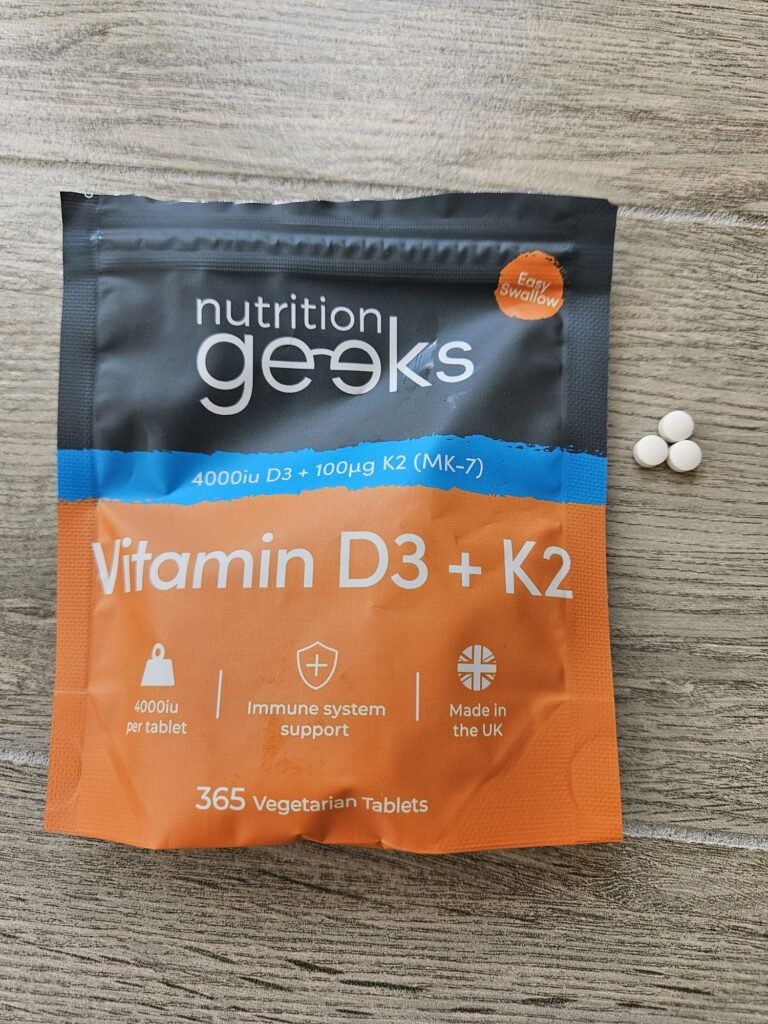
Vitamin D is something that most people benefit from taking, certainly during the darker autumn and winter months. This is because, although we can get some vitamin D from dietary sources, it is mainly synthesised in the skin when it is exposed to sunlight. Vitamin D is essential for healthy bones, teeth and muscles. More recently, I have seen preparations combining vitamin D and K2. The K2 is thought to help vitamin D reach its beneficial areas—especially in bones—and may provide cardiovascular benefits, although further research is needed to confirm this.
A closer look at Creatine
I was initially quite apprehensive about creatine. I had a preconception it could damage the kidneys and was only for serious bodybuilders. However, over time I saw more and more people recommending it, so I decided to do my own research. In summary, the evidence to date shows that creatine is safe to take. Low daily doses (3–5g) do not harm kidney or liver function and are well tolerated.
It is also not just a gimmick—it’s effective, especially for those in their 40s and beyond. It helps preserve muscle mass, increase strength, and support bone density. It may also help cognitive function. In terms of side effects, these are generally minimal and can include bloating or tummy upset. There is no reproducible evidence that it causes other adverse effects such as hair loss.
Finally, it is cheap and readily available. In summary, it is one of the most affordable and evidence-backed supplements on the market.
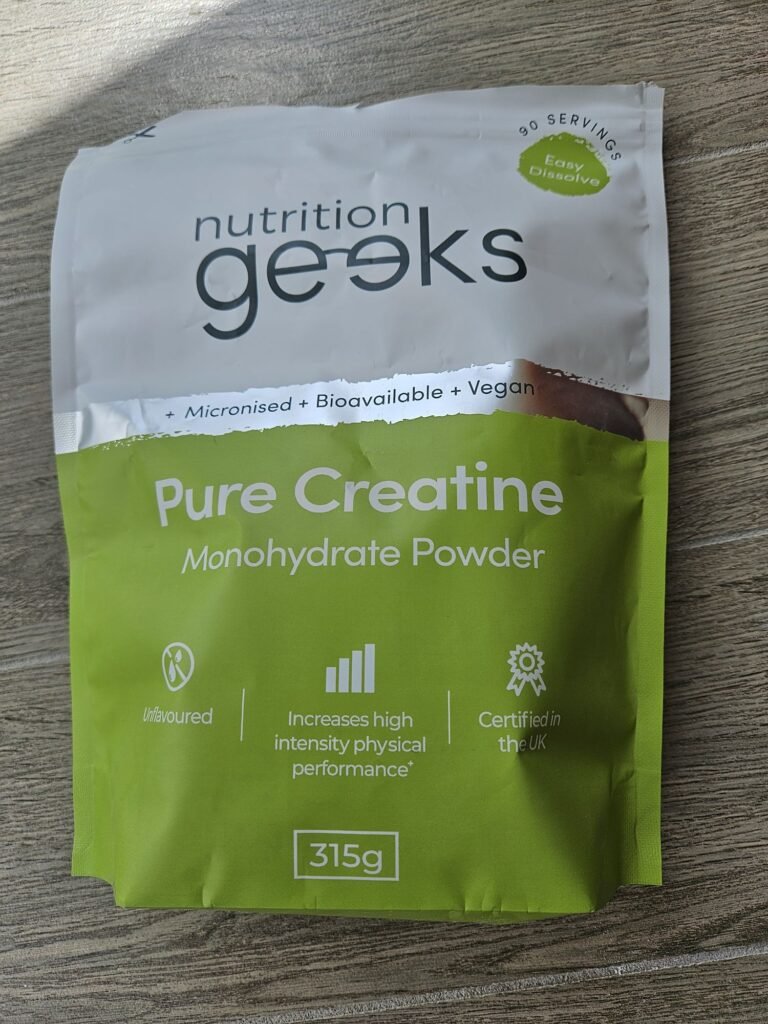
I use the Nutrition Geeks creatine monohydrate. It’s affordable (only £9.99 for a 90-day supply), comes in packaging that fits through the letterbox (very Frugal Kitty-approved), and dissolves easily without any perceptible taste. I have absolutely noticed a difference with taking this. I feel stronger and have better muscle definition after workouts. I will continue to take this, albeit I take it slightly suboptimally, approximately 3-4 times per week rather than every day.
My Creatine Routine
I take 3 grams per day (when I remember!), which is considered a safe, effective dose for women. I mix it into a soothing evening drink—kind of like a wellness hot chocolate. Here’s my favourite evening creatine recipe.
- 3g creatine monohydrate
- 5-10g collagen powder
- 5g organic cocoa powder
- squeeze of Manuka honey / sugar free caramel syrup to taste
- splash of milk

Supplements and prescribed medications
This is a question I get asked a lot—and understandably so. Unfortunately, there isn’t always a clear or simple answer. You’ll often see the advice “speak to your healthcare professional before taking supplements”, which can feel frustratingly vague.
In reality, your GP or pharmacist may be reluctant to give a definitive answer about supplement interactions. That’s not because they don’t care—it’s because most supplements are not regulated or tested to the same standard as prescription medications. They’re often sold as food products rather than drugs, which means the data on interactions with medications is limited or nonexistent.
That said, there are some well-known examples of supplements that can interfere with common medications:
- St John’s Wort can reduce the effectiveness of antidepressants, oral contraceptives, blood thinners, and even chemotherapy drugs.
- Ginkgo biloba, ginseng, and high-dose vitamin E may increase bleeding risk when taken alongside blood thinners like warfarin.
- Calcium, iron, and magnesium supplements can interfere with the absorption of certain antibiotics and thyroid medications.
So while most supplements are relatively low-risk, there are important exceptions, and the consequences of interactions can be serious in some cases. If you’re taking prescribed medication—especially for blood pressure, mental health, autoimmune conditions, or blood thinning—it may be worth having a chat with your pharmacist. Pharmacists often have better access to drug interaction databases and are trained to spot potential risks with over-the-counter supplements. Where in doubt, then it is always safest not to take the risk. After all, none of these supplements are essential and anything that is required for medical purposes would be prescribed by a clinician and carefully checked for interactions.
Are you interested in other supplements such as Protein Powders – I did a recent taste test of some popular ones – you can read more here.