First Aid Kit Essentials for Travel: A Practical Guide
Disclosure: Some links in this post are affiliate links. If you purchase through these links, I may earn a small commission at absolutely no extra cost to you.
Why a Travel First Aid Kit Matters
As both a doctor and a fan of holiday planning, I enjoy putting together a travel first aid kit for the family. The aim is to pack all the essentials you might need without ending up with a bulky bag full of items you never use.
Ready-made first aid kits are easy to buy, but in my experience they often contain lots of bandages, safety pins, and antiseptic wipes that don’t always get used. A homemade kit is more flexible, affordable, and can be tailored to your family’s health needs and travel plans whether that’s a weekend in Wales or kayaking down the Amazon.
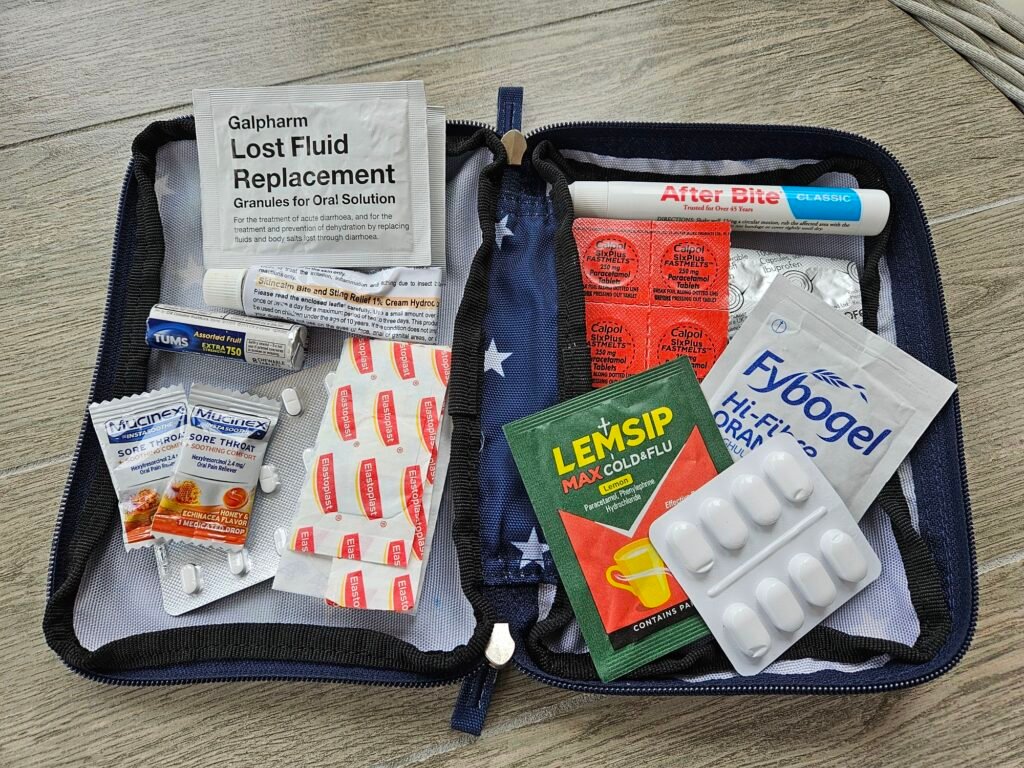
The list below is what I usually include in our family kit. Your own needs may vary, especially if you have any long-term health conditions or specific medical requirements. I buy most of these items from B&M or Home Bargains – I usually get the generic (non branded versions) where available, as these are cheaper and do the same job but are less expensive.
Core Items to Consider
Pain Relief
When the children were little, I would take a bottle of paracetamol and ibuprofen suspension on holiday with the syringe or medicine spoon. Now they are older, I use Calpol melts as these are lighter and easier to carry. As they dissolve in the mouth, no syringe or spoon is needed. Both paracetamol and ibuprofen also come in sachets, but I found that after a while in my bag, the packet degraded and there was some sticky leakage. Ibuprofen also comes in chewable tablets for children aged 7+. Not everyone can take these medications, so always check the leaflets.
Antihistamines
Antihistamines can be useful for hay fever, mild allergic reactions, and itchy insect bites. These are available over the counter, though do note there are age restrictions on purchase and use. The pharmacist can advise further on suitable products for children, depending on their age.
Plasters & Wound Care
Waterproof plasters in assorted sizes are one of the most frequently used items. While some people like antiseptic wound wipes or creams, it’s usually enough to clean wounds thoroughly with clean water and gently dry them before applying a plaster. For slightly larger cuts, wound adhesive strips can be really handy and do not take up much room in a bag. One or two slightly larger adhesive dressings (approx 10x12cm) are good for larger areas than most plasters will cover.
Oral Rehydration Sachets
These can help replace fluids and salts lost through diarrhoea or vomiting, which is particularly important in hot climates. While hopefully you won’t need them, they’re worth including for peace of mind and is something I never travel without.
Tweezers & Small Scissors
Handy for removing splinters or thorns, as well as trimming plasters or tape. If you are flying make sure scissors are stored in cargo and not hand luggage.
Travel Sickness Medication
If travelling by boat or winding roads, you may need travel sickness tablets. For example, cinnarizine (Stugeron) is available from pharmacies without a prescription, but you will need to speak with the pharmacist to purchase it. It is only suitable for children over the age of 5 years old and must be bought by an adult.
Some people find travel bands helpful, but I have never really had success with them. For mild nausea, I always carry a few chewy ginger sweets, which do seem to help and are really tasty. Keeping on the sickness theme, I always have some plastic sealable, disposable vomit bags. These are great to have on hand while travelling to dispose of rubbish (best-case scenario) or manage sickness on the go.
Insect Repellent
There is a lot of choice in this area, including ‘natural’ and essential oil-based products. I would avoid any of these if there is a real chance of a mosquito bite, as they may be ineffective or even irritate the skin. Mosquito bites are not something to take lightly, and you need something with evidence-based protection, such as a DEET-based formula, to keep your family safe. The Fitfortravel website has loads of additional information about avoiding insect bites and the best formulations to use, depending on age and country of travel
Aloe Vera Gel
Often used for soothing mild sunburn or skin irritation. I tend to take to smallest tube I can find and keep it in the fridge on holiday where possible so it is always nice and cool ready to apply. As prevention is always better than cure, make sure that you use a SPF 30+ to protect against UVB and a formulation that has a minimum of a 4* (preferably 5*) UVA protection.
Indigestion Remedies
Overindulged on holiday food? An antacid or similar indigestion remedy can be useful. A wide range is available from bottles, sachets, tablets etc so choose which you prefer and is convenient to pack.
Antifungal Cream
For warm and sweaty areas that may be prone to yeast infections and rashes, available over the counter in pharmacies. The active antifunagal ingredients are usually Miconazole or Clotrimazole but may be sold under different brand names.
Constipation Treatment
Dietary changes on holiday as less fluid intake (cocktails don’t count!) can all lead to constipation and feeling bloated or uncomfortable. As well as increasing water and fibre intake, a gentle laxative can also help. Ispaghula husk (ie Fybogel) comes in sachet form ideal for putting a few in your first aid kit just in case. Like with anything it may not be suitable in specific conditions so check the instructions.
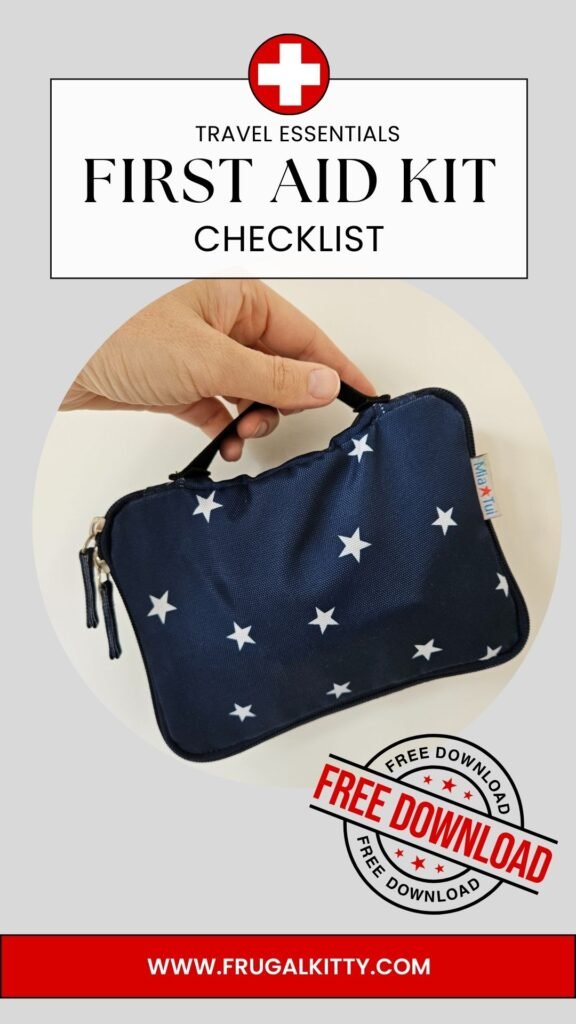
Download the Travel First-Aid Kit Essentials Checklist (PDF)
Free printable A4, includes core list and specialist add-ons
For personal use only. Not medical advice.
Optional Extras
Some families also find it helpful to include:
- Cooling packs for bumps and bruises – instant ones activate on squeezing with no need for a freezer
- Loperamide (for adult diarrhoea relief)
- Disposable Gloves
- Antibacterial wipes / hand santiser – I never travel without these but usually have them in my handbag rather than first aid kit.
- Thermometer – especially useful with babies and young children, though some parents find it less essential as children get older
- Useful Numbers – Local emergency number / healthcare provider or health insurance company / Next of Kin / Embassy
Packing & Practical Tips
- Go generic: Supermarkets and discount shops often stock unbranded medicines that work just as well as branded ones, but at a fraction of the price. Certain formulations (ie Calpol melts) will be branded only.
- Lighten the load: Remove bulky outer packaging to save space, but keep hold of the patient information leaflet for dosing instructions or take a photo of the back of the box instead.
- Tailor your kit: Always consider your destination and personal health needs. For example, people with asthma may want to pack a spare inhaler, while those with severe allergies will need to carry prescribed adrenaline auto-injectors.
- Check local rules: Some countries have restrictions on certain medicines (for example, codeine-containing products). If travelling abroad, check local guidance before packing.
Final Thoughts
There’s no single “perfect” first aid kit. The best one is the one that’s tailored to your family, your health, and your trip. A few carefully chosen first aid kit essentials can save stress on holiday — and they don’t have to cost a fortune.
Useful Links & Resources
(All Accessed January 2026)
- NHS – Sunscreen and Sun Safety: Staying safe in the sun and protecting your skin.
- NHS – Treating Diarrhoea and Vomiting: Self management and when to seek help.
- Travel Health Pro – Travel Guidance – Worldwide: Fantastic comprehensive travel resource
Disclaimer: This article is for general information only and is not a substitute for medical advice. Always read the patient information leaflet supplied with medicines. If you have concerns about your health or need personalised advice, speak to your GP, pharmacist, or call NHS 111. In an emergency, call 999.